
 EN
Destinations
Arctic Travel Guide
Your complete Northern Norway playbook: Bodø, Lofoten, Helgeland, Steigen, Senja, Tromsø and the practical details in between.
7 min readRead guide
THE LOCAL FIELD NOTES
The places we love. The routes we return to. Your guide to Bodø,
Lofoten and the wide-open North — with the practical bits, too.
 Small home. Wide horizons.67° N / FIELD NOTES
MAKE THE JOURNEY YOUR OWN
Destination guides, route ideas and life on the road.
Original English and Norwegian guides, together.
ENDestinations
Your complete Northern Norway playbook: Bodø, Lofoten, Helgeland, Steigen, Senja, Tromsø and the practical details in between.
ENDestinations
South Lofoten, beaches, hikes, fishing villages, Trollfjord and a 7+ day route from Bodø.
 EN
Destinations
Harbour saunas, Kjerringøy, Mjelle, Langsanden, mountain viewpoints and Saltstraumen.
 EN
Destinations
Take the slow road south: Saltstraumen, Svartisen, Torghatten, island views and the ferries of Fv17.
 EN
Plan your trip
The original 7-day Lofoten classic and a slower 10-day Bodø–Lofoten journey, with room for weather.
 EN
On the road
Packing, narrow roads, changing weather, facilities, responsible camping and living well in the van.
ENDestinations
A local’s guide to city saunas, the north and south loops, Steigen and the 15-stop Lofoten Odyssey.
NODestinations
Lokale favoritter fra Langsanden og Kjerringøy til havna, spa, toppturer og opplevelser på sjøen.
 EN
Plan your trip
Freedom, local culture, seasonal comfort and a practical home that moves with the weather.
NOPlan your trip
Komfort, strøm, varme og praktiske valg for fotografer, par og arbeid på reisen.
NOPlan your trip
En norsk introduksjon til kulturbyen, spa, Saltstraumen, Kjerringøy, vinteraktiviteter og ferga videre.
 EN
On the road
The full equipment overview: cooking, bedding, power, winter tools, safety, water and cleaning.
 EN
On the road
Airport collection, EV range and charging, winter comfort, kitchen, showers, tolls, parking and support.
THE ROUTE IS ONLY THE BEGINNING
Choose a van in Bodø. Leave a little room for wonder.
Find your campervanDestinations · THE LOCAL FIELD NOTES
Your complete Northern Norway playbook: Bodø, Lofoten, Helgeland, Steigen, Senja, Tromsø and the practical details in between.
Dear adventurer, welcome to the raw and breathtaking beauty of Northern Norway. Whether you are chasing the midnight sun, exploring white-sand beaches, climbing dramatic peaks or watching the Northern Lights dance across the sky, your campervan is the key to a memorable journey.
This guide brings together local favourites, scenic routes, food stops and places to stay. Start in Bodø, then build outward according to the weather, your time and how ambitious you want the journey to be. Keep the route flexible: this part of Norway rewards people who chase the light rather than a rigid schedule.
Saltstraumen, around 30 km from Bodø, brings you close to one of the world’s strongest tidal currents. Kjerringøy combines a historic trading post with a short ferry adventure. Keiservarden rewards a walk with panoramic views over the city, fjords and distant Lofoten.
Junkerfjellet (283 m) and Keiservarden (366 m) are the gentler options. Per Karlsatind (about 1,036 m), Litltinden and Sandhornet (993 m) are more demanding mountain days; choose a route that matches your experience and the conditions.
Mjelle is known for its red-tinted sand. Hovdsundet is a secluded shoreline between two coves. Auvika and Langsanden offer beautiful coastal scenery. Langsanden, on Sandhornøya, is Even’s personal favourite.
Bryggerikaia for fish soup and seafood; Olivia for pasta and pizza; Txaba for tapas; Hundholmen Brygghus for local food and craft beer; Craig Alibone Pâtisserie for chocolate and cakes. Check opening hours and seasonal menus.
Look into Bodø Camping, Saltstraumen Camping, Bodø Harbour and the designated facilities at Langsanden. Rønvikfjellet, Mjelle and Bratten are scenic places to explore, but a scenic parking area is not automatically an authorised overnight pitch. Check local signs and the operator’s rules.
Follow the E10 from Å towards Svolvær. Make time for Nusfjord, Henningsvær, the Reinehalsen viewpoint, Sakrisøy, Stamsund, Uttakleiv, Eggum and Hov on Gimsøy.
Hoven (368 m) is a shorter option. Ryten and Kvalvika combine mountain views and a hike-to beach. Reinebringen, Festvågtind, Himmeltinden and Vågakallen are more demanding choices; exposed or technical terrain needs suitable experience and conditions.
Haukland and Uttakleiv make a natural pair. Rambergstranda is a lovely open beach beside the E10. Skagsanden is popular for photography, and Unstad brings Arctic surfing and a completely different coastal mood.
Try Børsen Spiseri in Svolvær, Fiskekrogen in Henningsvær, Anita’s Sjømat on Sakrisøy and Nordis. Seafood, fish burgers and harbour views are part of the route, too.
Options from our guide include Ramberg Gjestegård, Moskenes Camping and designated paid pitches at Uttakleiv and Eggum. Use marked visitor parking around Henningsvær and confirm where overnight stays are allowed.
The coastal road, Fv17, is the slower, island-filled alternative to a fast inland drive. Give the ferries and short detours room in your plan.
Walk towards the Torghatten hole, climb Rødøyløva for island views, or choose a suitable peak in De Syv Søstre. Allow enough time for transport and conditions; the bigger peaks are serious mountain outings.
Hildurs Urterarium, Til Elise from Marius and the café at Forvik are food stops to research. Torghatten Camping and Yttervik Camping near Mo i Rana are campsite options. Holandsfjorden and Braset offer scenic surroundings; use permitted roadside parking or established pitches rather than driving into the landscape.
Steigen is one of the mainland detours we keep coming back to: turquoise water, alpine peaks, quieter roads and a different rhythm from the E10. Engeløya adds coastal history and the Batterie Dietl site. Give it extra days rather than treating it as a quick stop.
It also works as an optional extension when returning from eastern Lofoten through Lødingen–Bognes, Hamarøy and the mainland towards Bodø. Check ferry routes and driving time before committing to the loop.
Tungeneset’s walkway looks towards the jagged Okshornan peaks. Ersfjordstranda and Bøvær bring beautiful beaches, Bergsbotn has a panoramic viewing platform, and Husøy is a fishing island connected by a bridge.
Segla is steep and exposed; Hesten offers the classic view towards Segla, while Husfjellet opens up broad coastal panoramas. These are mountain routes, so check a current route description, forecast and your own ability.
Our original picks include Skreien Spiseri around Gryllefjord and Senjastua near Finnsnes. Campsite options include Fjordbotn Camping and Senja Fjordcamp. Check current access and overnight rules at Ersfjordstranda and around Bøvær.
Take Fjellheisen for a view over Tromsø or walk the Sherpa Steps towards Fløya. Drive around Kvaløya for Sommarøy’s beaches and, in suitable conditions, the Brosmetinden hike.
Bardus Bistro, Fiskekompaniet and Mathallen Tromsø were selected in our original guide for local flavours and seafood. Reserve and check seasonal opening times.
Tromsø Lodge & Camping is a full-service option near the city. Grøtfjord and the Skibotn area can offer darker surroundings for sky watching; check authorised parking and overnight facilities. Skibotn is a separate drive from Tromsø, not a quick city stop.
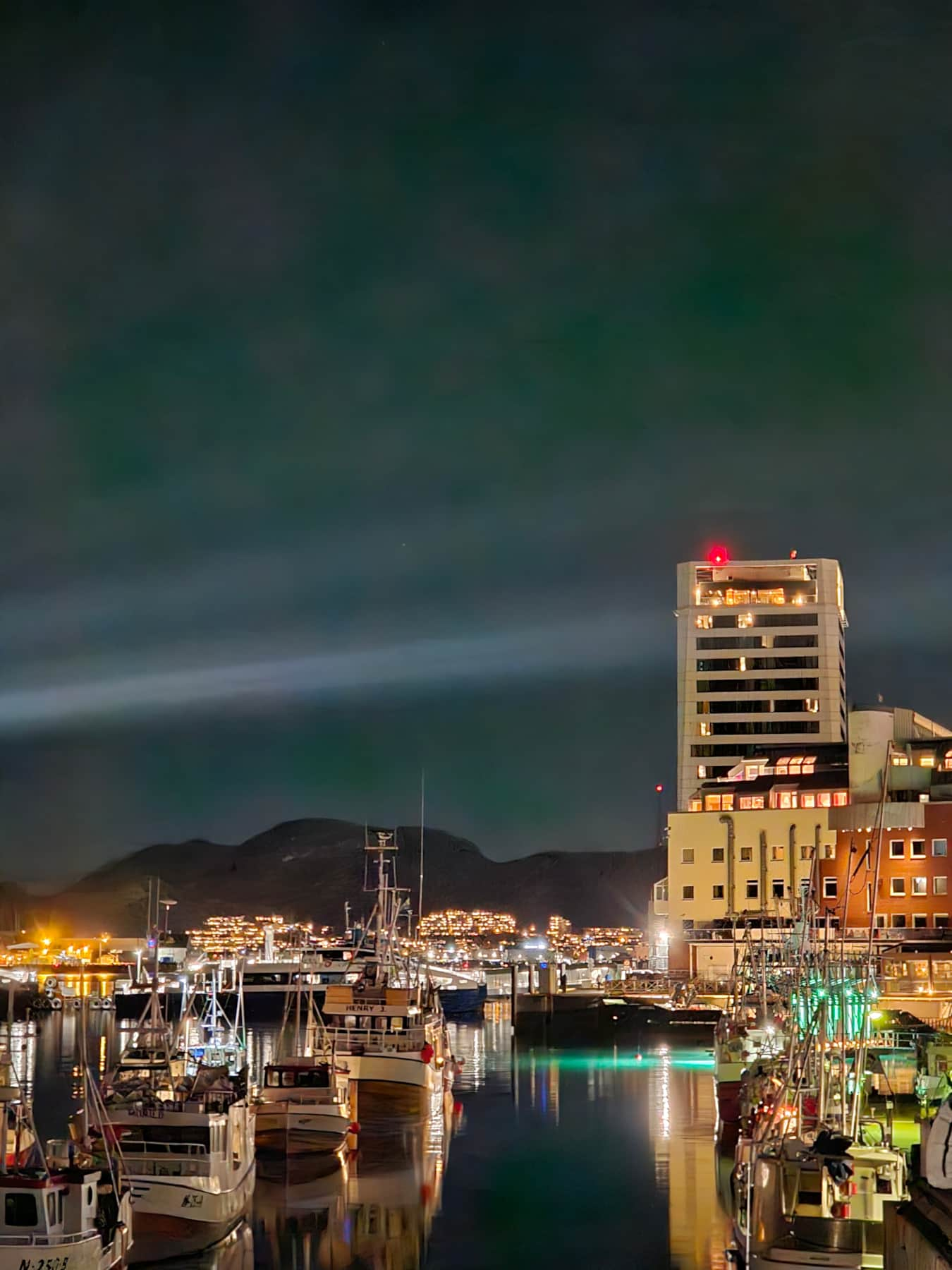
Look for dark nights from late August into early April; the exact viewing season changes with latitude and daylight. Our usual evening watch is around 21:00–00:30, but aurora can appear outside that window and is never guaranteed.
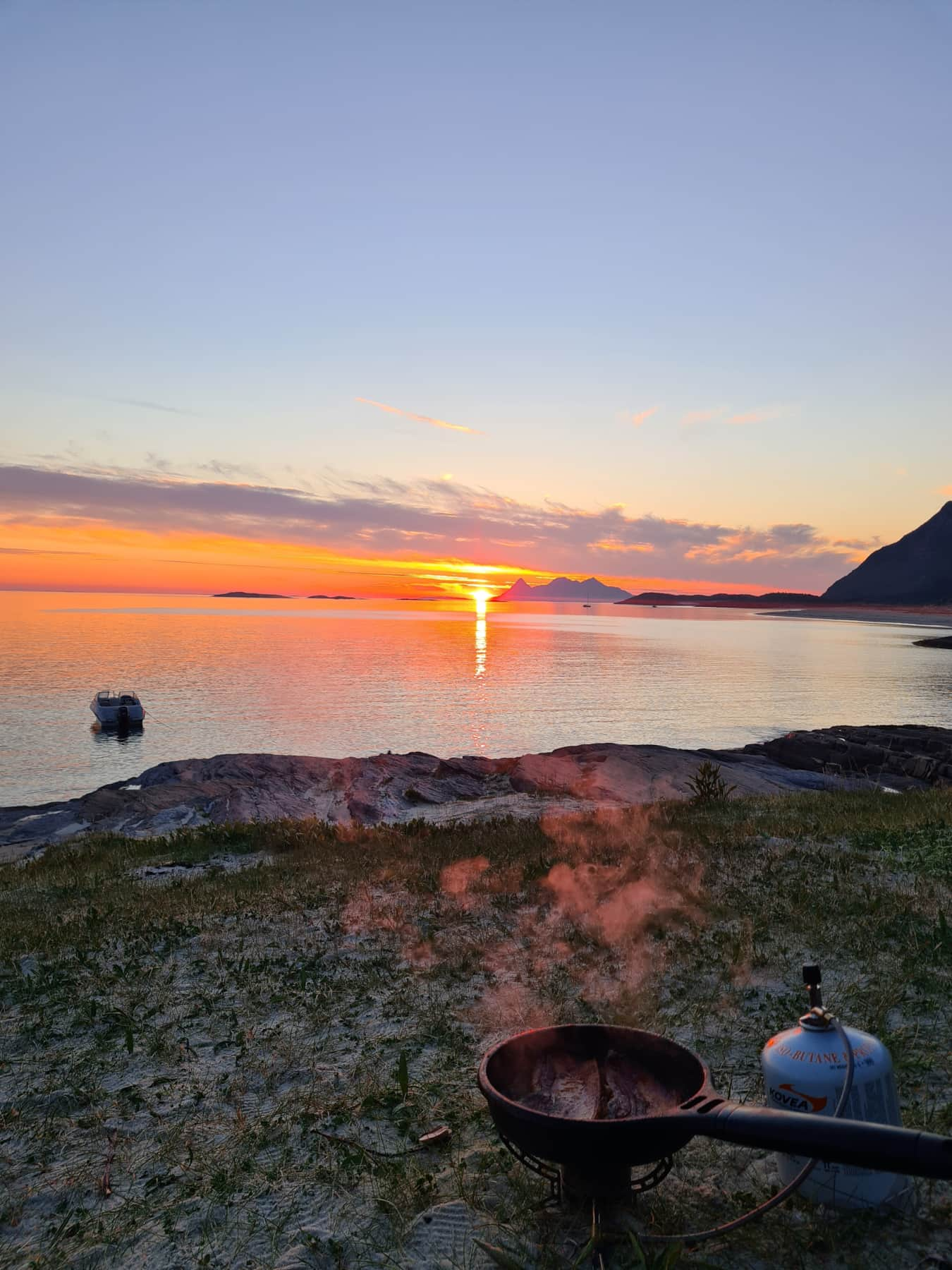
The bright northern summer changes the pace of a trip. In Lofoten, midnight-sun season is roughly late May to mid-July, with local differences in dates and the horizon. Eggum, Gimsøy, Uttakleiv, Mjelle, Kjerringøy and Langsanden offer open coastal views.
Give evenings room in the schedule, cook a simple meal where outdoor seating is permitted, and use the van’s blackout covers when it is time to sleep. Late hikes can have wonderful light in summer, but daylight does not remove mountain risks: choose the route, weather and turnaround time carefully.
Plan the Bodø–Moskenes crossing alongside your van booking. Direct sailings are commonly around 3–3½ hours, while routes via the islands take longer. Check the timetable for your actual departure. Reserve vehicle space ahead in the busy season, enter the correct vehicle length and follow the operator’s current check-in instructions. A reservation is recommended rather than legally required; only part of the ferry capacity can be reserved.
Gryllefjord–Andenes is a seasonal summer connection; confirm operating dates before building a northern loop around it. Fv17 also uses multiple ferries. Use Reis Nordland and the ferry operators’ current timetables rather than a fixed driving-time estimate.
Use established campsites and designated motorhome pitches whenever possible. The right to roam does not give a vehicle permission to drive or park anywhere. Follow road access, parking and overnight signs, keep at least 150 metres from inhabited houses and cabins when camping outside designated sites, and normally stay no more than two nights without the landowner’s permission. Never drive onto beaches or other uncultivated land. Empty greywater and toilet waste only at designated disposal stations.
Take your rubbish with you, use public toilets, keep noise low and leave room for other visitors. The beaches and villages in this guide are lived-in places, not an open campsite.
Enjoy the freedom, beauty and magic of the North. Whether you are beside a turquoise bay, under a sky full of stars or eating a fish burger after a long day on the road, go make some core memories.
Go explore and take care,
Even · Owner, Bodø & Lofoten Campervans
KEEP EXPLORING
ENDestinations
South Lofoten, beaches, hikes, fishing villages, Trollfjord and a 7+ day route from Bodø.
ENDestinations
Harbour saunas, Kjerringøy, Mjelle, Langsanden, mountain viewpoints and Saltstraumen.
ENDestinations
Take the slow road south: Saltstraumen, Svartisen, Torghatten, island views and the ferries of Fv17.
YOUR NEXT GOOD STORY
Start in Bodø. Take the North at your own pace.
Find your vanDestinations · THE LOCAL FIELD NOTES
South Lofoten, beaches, hikes, fishing villages, Trollfjord and a 7+ day route from Bodø.
Sharp peaks, white beaches, fishing villages and roads that make you stop more often than planned. Lofoten is compact enough to feel manageable, but dramatic enough to feel endless. Arrive through Bodø, ferry to Moskenes and work east through the islands.
Drive calmly, keep room for the weather, and do fewer stops properly. Some days are made for hiking, some for a beach walk, and some for a harbour café. Your campervan lets the route adapt without turning every weather change into a new hotel booking.
The visual anchor of the islands: red rorbuer, steep granite peaks and sheltered water. Walk slowly and use the marked viewpoints and visitor parking near the village.
A short stop with a big visual payoff. The bridge viewpoint is iconic in changing light, but keep traffic flowing and stay out of the road.
Yellow fishermen’s cabins, small harbour details and a softer rhythm. Pair it with Reine and Hamnøy, and stop at Anita’s Sjømat if it fits your day.
More than the end of the E10: fishing heritage, preserved buildings, a museum atmosphere and the old bakery. It gives the southern loop a sense of arrival.
Stay at an authorised campsite in the Reine–Moskenes area, visit the southern villages, and add one suitable hike when conditions are good. There is no prize for rushing the best part.
White sand, turquoise water and easy access. A perfect slower half-day; arrive early in peak season and use the designated parking.
Dark rocks, rougher coastline and open sky. Pair it with Haukland for photography and evening light. Follow the local parking and campsite arrangements.
Ramberg’s broad white beach is an easy pause beside the E10. Skagsanden brings striking sand patterns and a northerly coastal view popular with photographers.
Arctic surf, strong weather and a distinctive village feel. Watch the surfers, try a lesson with a local operator or stop for a cinnamon bun. Respect the sea and keep clear of the water in rough conditions.
A hike-to beach rather than a roadside stop. Pack food, water and layers, allow plenty of time and take everything home; do not rely on facilities at the beach.
Steep, iconic stone stairs and a memorable view over Reine. Save it for suitable weather and visibility; ice, snow, wet steps and exposure can change the outing completely.
Combine beach and mountain for a fuller day. Ryten’s viewpoint is exposed and can be very windy. Stay well back from edges; the photograph is never worth a fall.
Hoven on Gimsøy offers a shorter summit outing. Festvågtind near Henningsvær is steeper and more demanding. Choose by route difficulty and conditions rather than their similar postcard appeal.
Himmeltinden and Vågakallen also appear in our wider guidebook. These are more serious mountain objectives and should not be treated as interchangeable with a gentle viewpoint walk.
A preserved fishing village tucked into a narrow fjord, with heritage, yellow cabins, cafés and an old general store atmosphere. Parking can be limited, so plan a calmer arrival.
Harbour walks, galleries, cafés, the well-known football pitch and a slower village rhythm. Give it a rest-day pace rather than a five-minute photo stop.
The reconstructed longhouse at Borg is a natural cultural detour beside the E10 and a good option when the weather turns.
Stamsund and Hov on Gimsøy add a different coastal rhythm. Use village days as breathing room between beaches and bigger hikes.
The practical hub for groceries, restaurants, local tours and decisions about the next leg. Reset here before pushing farther east or beginning the return.
A narrow, steep-sided fjord with boat-tour options and a chance to see sea eagles. Dress warmly, check the operator’s departure and let the sea conditions decide the day.
An island detour with white beaches and walks looking back towards the Lofoten Wall. Check current ferry connections and decide whether to visit on foot; it needs its own time in the route.
Eggum is one of the best-known midnight-sun stops, with open ocean, rugged coastline and the Head sculpture. Gimsøy and Uttakleiv also offer open horizons. In the darker months, those coastal skies can work for aurora watching.
Midnight sun needs the right season and an unobstructed horizon. Aurora needs darkness, a clear patch of sky and patience. Keep evening plans flexible and use permitted parking rather than blocking a roadside viewpoint.
The mainland loop is longer and should be given extra days if needed. Do not force it into a fixed seven-day rental or book a tight connection to a flight.
Plan the Bodø–Moskenes crossing alongside your van booking. Direct sailings are commonly around 3–3½ hours, while routes via the islands take longer. Check the timetable for your actual departure. Reserve vehicle space ahead in the busy season, enter the correct vehicle length and follow the operator’s current check-in instructions. A reservation is recommended rather than legally required; only part of the ferry capacity can be reserved.
Stock up in Bodø before the crossing; Rema 1000 and Coop Extra are practical supermarket options. Wine and spirits are sold through Vinmonopolet, while beer sales have local time limits. Check the actual shop hours rather than planning around a late-evening arrival.
At handover, learn the system fitted in your van. Some 230V outlets use a power station or inverter, while others need campsite hookup. Diesel heating fuel arrangements also differ. AutoPASS tolls and applicable ferry charges are settled according to your rental agreement.
Use established campsites and designated motorhome pitches whenever possible. The right to roam does not give a vehicle permission to drive or park anywhere. Follow road access, parking and overnight signs, keep at least 150 metres from inhabited houses and cabins when camping outside designated sites, and normally stay no more than two nights without the landowner’s permission. Never drive onto beaches or other uncultivated land. Empty greywater and toilet waste only at designated disposal stations.
The best Lofoten trip is the one with enough structure to move well, enough freedom to adapt and enough time to enjoy the stops that become your favourites.
KEEP EXPLORING
ENDestinations
Your complete Northern Norway playbook: Bodø, Lofoten, Helgeland, Steigen, Senja, Tromsø and the practical details in between.
ENDestinations
Harbour saunas, Kjerringøy, Mjelle, Langsanden, mountain viewpoints and Saltstraumen.
ENDestinations
Take the slow road south: Saltstraumen, Svartisen, Torghatten, island views and the ferries of Fv17.
YOUR NEXT GOOD STORY
Start in Bodø. Take the North at your own pace.
Find your vanDestinations · THE LOCAL FIELD NOTES
Harbour saunas, Kjerringøy, Mjelle, Langsanden, mountain viewpoints and Saltstraumen.
Bodø is both a destination and a launchpad. Ferries, food, beaches, sauna culture and real mountain days are all within reach. Use an arrival or return day here, or stay longer and let the mainland become part of the trip.
The city centre is compact and convenient for supplies, cafés and harbour walks. Bodø was European Capital of Culture in 2024, and its waterfront, art and music make a natural contrast to quieter coastal days.
Walk the waterfront and Moloen breakwater for views between the city and the open sea. When the wind is too lively for a beach day, make the city your reset point.
Book Pust Sauna in the inner harbour or investigate Fauna Sauna at Tolder Holmers vei. Check the operator’s facilities and times, and follow its sea-dipping guidance. Add coffee and a slow walk afterwards.
Food picks from our guide include Bryggerikaia, Hundholmen Brygghus, Olivia, Txaba and Craig Alibone Pâtisserie. The local guide also highlights Lyst På and Tigerberget. Check seasonal opening hours and book ahead where needed.
White beaches, turquoise water, sheltered bays and mountains make Kjerringøy feel farther away than it is. The preserved 19th-century trading post adds history and a slower village atmosphere.
Drive north on Fv834 and take the Festvåg–Misten ferry. The guide describes a roughly 42 km journey from Bodø and a ferry crossing of about ten minutes; queues and the sailing timetable determine the total trip time. Plan snacks and water and leave time for coastal stops.
Use it as a half-day or full-day loop, with open-horizon light in summer or darker skies away from the city in the cooler season.
The red and pink tones in the sand come from garnet minerals. Follow Fv834 north, then the signed access road. Our original route notes describe about 20 km of driving, a signed side road and a roughly 2.2 km return walk taking around an hour. Bring water, snacks and a wind layer.
Quieter coastal walks and beautiful coves add variety beyond Mjelle. Check the trail and parking access before setting out; the shoreline is a place to visit on foot, not a place to drive the van.
A broad, dune-backed beach on Sandhornøya, also called Sandvikstranden. Follow Fv17 via Kjøpstad and signs towards Alsvik. Use the designated parking, then walk to the sand. The long beach and open horizon are ideal for slow walks and changing light.
Langsanden is Even’s personal favourite. Use the beach facilities according to local rules and confirm whether overnight vehicle parking is available. Never drive onto the beach.
Lakes, forest, freshwater swims and a choice of short walks or longer outings east of Bodø. A useful lower-effort day for families, mixed groups or tired hiking legs.
Historic buildings and a coastal setting introduce Nordland’s trading and seafaring history. It is an easy half-day cultural stop close to the city, with views towards Børvasstindan.
Coastal paths and outdoor activities make a good family stop. Combine it with a shorter city or beach day instead of making every day a summit mission.
The classic Bodø panorama at around 366 m. A commonly used route from the Turisthytta/Wood Hotel area is about 5.5 km return over gravel, stairs and trail. Wood Hotel on Rønvikfjellet also offers a viewpoint and a place to research spa or dining reservations.
Around 1,036 m high, with roughly 1,000 m of ascent on the commonly described route. It is a steep, demanding outing for experienced hikers in stable conditions, not a short airport-day stroll.
Access is described from the Futskaret area off Fv834. The route climbs steeply and can be slippery when wet. It is a local favourite for coastal views, but choose the conditions carefully.
A longer mountain day on Sandhornøya, around 993 m high. The original guide describes a roughly 12 km route from the Horsdal area, with wide regional views in clear weather.
Route lengths depend on the start point and chosen path. Check a current route description and weather forecast, carry layers and allow a realistic turnaround time.
One of the world’s strongest tidal currents is an easy road trip from Bodø via Rv80/Fv17. Timing matters more than simply arriving: check the current timetable for your day.
View the water from suitable bridge and shore viewpoints, or book a guided RIB outing for another perspective. Stay clear of edges and do not enter the current. Stronger periods often occur around new and full moon, but use the actual timetable for planning.
For summer evening light, think Mjelle, the Kjerringøy coastline and Langsanden/Sandhornøya’s open horizons. For aurora, leave the city lights behind and look for clear skies on country roads or near inland lakes.
A campervan gives you options when the forecast changes. Reposition only where the roads are safe and park where permitted. If the coastal wind is doing its Nordic hairdryer routine, a sheltered walk, sauna or museum day is an excellent plan.
Add Langsanden for more space, a harbour sauna to reset, and Saltstraumen when its timetable fits. Bodø should feel like the beginning of the trip, not simply the airport before the ferry.
KEEP EXPLORING
ENDestinations
Your complete Northern Norway playbook: Bodø, Lofoten, Helgeland, Steigen, Senja, Tromsø and the practical details in between.
ENDestinations
South Lofoten, beaches, hikes, fishing villages, Trollfjord and a 7+ day route from Bodø.
ENDestinations
Take the slow road south: Saltstraumen, Svartisen, Torghatten, island views and the ferries of Fv17.
YOUR NEXT GOOD STORY
Start in Bodø. Take the North at your own pace.
Find your vanDestinations · THE LOCAL FIELD NOTES
Take the slow road south: Saltstraumen, Svartisen, Torghatten, island views and the ferries of Fv17.
If you have extra days, take Kystriksveien, Fv17. It is a journey of ferries, glaciers and an enormous island-filled coast. The attraction is not a single finish line; it is the changing landscape between crossings.
Drive less each day and let a detour, a beach or a ferry café become part of the experience. This route rewards time and patience rather than a fixed daily distance.
Around 30 km from Bodø, Saltstraumen makes a natural first stop. Huge volumes of water move through the narrow strait and create powerful whirlpools.
Check the current timetable before leaving. Use the bridge or appropriate shoreline viewpoints, or book a guided boat outing. The water itself is dangerous; admire it from a safe position.
Further south, the landscape opens towards Svartisen. The original route starts at Holandsvika, where a seasonal shuttle boat crosses the fjord before a walk towards the glacier viewpoint.
Check the boat’s operating dates, walking conditions and return departure in advance. Enjoy the contrast between blue ice, green valleys and the coast from a safe distance. Do not approach unstable ice or walk onto the glacier without a qualified guide.
The natural tunnel through Torghatten is one of the coast’s defining sights. Walking towards and through the opening gives a framed view of the surrounding archipelago.
The original guide describes a tunnel about 160 m long and 35 m high. Check the current marked route and access information, wear proper footwear and leave time for the viewpoints rather than treating it as a rushed photo stop.
You will take multiple ferries. Embrace it. This is where you have coffee, eat a waffle and enjoy the coastline from the sea. The pauses slow down the journey in the best possible way.
Build each day around current sailings, allow for queues and do not rely on a navigation app’s driving time alone. The number of crossings depends on the section and island detours you choose.
Food stops from the wider guide include Hildurs Urterarium, Til Elise from Marius and the café at Forvik. Research reservations and seasonal hours before going out of your way.
Torghatten Camping and Yttervik Camping near Mo i Rana are campsite options. Around Holandsfjorden and Braset, look for established or clearly permitted pitches and avoid driving off-road.
Use established campsites and designated motorhome pitches whenever possible. The right to roam does not give a vehicle permission to drive or park anywhere. Follow road access, parking and overnight signs, keep at least 150 metres from inhabited houses and cabins when camping outside designated sites, and normally stay no more than two nights without the landowner’s permission. Never drive onto beaches or other uncultivated land. Empty greywater and toilet waste only at designated disposal stations.
KEEP EXPLORING
ENDestinations
Your complete Northern Norway playbook: Bodø, Lofoten, Helgeland, Steigen, Senja, Tromsø and the practical details in between.
ENDestinations
South Lofoten, beaches, hikes, fishing villages, Trollfjord and a 7+ day route from Bodø.
ENDestinations
Harbour saunas, Kjerringøy, Mjelle, Langsanden, mountain viewpoints and Saltstraumen.
YOUR NEXT GOOD STORY
Start in Bodø. Take the North at your own pace.
Find your vanPlan your trip · THE LOCAL FIELD NOTES
The original 7-day Lofoten classic and a slower 10-day Bodø–Lofoten journey, with room for weather.
Do not try to do everything. Distances can look short on a map, while narrow roads, viewpoints, ferry queues and the weather make the actual journey slower. Our original guide uses roughly 50 km/h as a rough planning illustration, not a promised average.
These are suggested routes. Match the first ferry to your pick-up from 16:00, book separate campsites and crossings where needed, and return the van in Bodø by 12:00 on the final day. Move the final crossing earlier if a same-day return leaves too little margin.
Collect the van, take a suitable ferry and settle at an established campsite around Reine. If your sailing does not fit handover, spend the first night around Bodø and adjust the route.
Explore the southern fishing villages. Give the bakery, museum atmosphere and harbour walks time.
A slower beach day, with Rambergstranda and Skagsanden along the route.
Arctic surf atmosphere, then the reconstructed longhouse at Lofotr in Borg.
Galleries, cafés and harbour life, followed by a practical restock in Svolvær.
Open horizons, a walk and time to let the weather choose the day. Begin positioning for the return.
Use a suitable Moskenes–Bodø crossing. If the sailing cannot meet the agreed 12:00 return, cross on Day 6 instead.
Pace: medium. Focus: the island highlights.
Use Bodø as a destination. Mix harbour time, beach walks and a coastal day trip with the Festvåg–Misten ferry.
Cross into South Lofoten and settle in rather than adding a long drive after arrival.
Reine, Hamnøy, Å, Ramberg, Haukland, Uttakleiv, Unstad, Henningsvær and Svolvær. Spread the stops across the weather windows.
Return to the mainland with enough margin. If the current timetable fits, visit Saltstraumen.
The original route suggests Per Karlsatind before departure. That is a substantial hike: add an extra day or do it earlier unless your schedule, conditions and experience genuinely allow it. A short walk is the better fit before the 12:00 van return.
Pace: relaxed. Focus: a fuller Bodø and Lofoten experience.
For a different ending, continue from eastern Lofoten to Lødingen, take the ferry to Bognes and drive south through Hamarøy. With extra time, add Steigen and Engeløya before returning to Bodø.
This is an alternative from the Lofoten Mega Guide rather than the original seven-day return crossing. Check your distances, sailing times and rental end date before choosing it.
Plan the Bodø–Moskenes crossing alongside your van booking. Direct sailings are commonly around 3–3½ hours, while routes via the islands take longer. Check the timetable for your actual departure. Reserve vehicle space ahead in the busy season, enter the correct vehicle length and follow the operator’s current check-in instructions. A reservation is recommended rather than legally required; only part of the ferry capacity can be reserved.
Keep a spare weather window for a summit, book popular campsite pitches in season and confirm winter facilities on cooler-season trips. Your best day may be the one you leave unplanned.
KEEP EXPLORING
ENPlan your trip
Freedom, local culture, seasonal comfort and a practical home that moves with the weather.
NOPlan your trip
Komfort, strøm, varme og praktiske valg for fotografer, par og arbeid på reisen.
NOPlan your trip
En norsk introduksjon til kulturbyen, spa, Saltstraumen, Kjerringøy, vinteraktiviteter og ferga videre.
YOUR NEXT GOOD STORY
Start in Bodø. Take the North at your own pace.
Find your vanOn the road · THE LOCAL FIELD NOTES
Packing, narrow roads, changing weather, facilities, responsible camping and living well in the van.
Living in a van brings freedom, but the Arctic still asks you to be prepared. Even a summer trip needs warm layers and room for a sudden weather change.
Our vans provide the essentials for sleeping, cooking and keeping comfortable. Bedding, towels, kitchenware, a camping table and chairs form the core setup. Heating, power, water, shower and storage arrangements depend on the vehicle.
The original essentials guide highlights insulated window covers, dimmable lighting, a fridge/freezer, propane cooking, a portable power station, navigation connectivity and winter equipment. Some vehicles also have a projector, drying storage or an outdoor shower; Atlas has its own bathroom.
Roads can be narrow. Use passing places correctly, let faster traffic past where it is safe and never stop in the carriageway for a photograph. Check vehicle height and the signs before entering low tunnels or car parks.
Weather changes quickly. Check Yr, current traffic information and warnings before moving. In strong wind, snow or ice, shorten the day or wait somewhere sheltered. A wind number on an app is not a universal safe-driving threshold for every vehicle.
Do not let a scenic route or a ferry booking push you into driving conditions beyond your experience. Be alert for wildlife and leave extra time in winter.
Use established campsites and designated motorhome pitches whenever possible. The right to roam does not give a vehicle permission to drive or park anywhere. Follow road access, parking and overnight signs, keep at least 150 metres from inhabited houses and cabins when camping outside designated sites, and normally stay no more than two nights without the landowner’s permission. Never drive onto beaches or other uncultivated land. Empty greywater and toilet waste only at designated disposal stations.
Keep at least four metres between camping units where required for fire safety. Do not use passing bays as pitches and remember that scenic rest areas are primarily for short breaks. Take rubbish with you and leave access clear.
Campsites and designated motorhome stops provide the most dependable places for showers, water and emptying facilities. Check which services are open in the season you are visiting.
Ureddplassen is a memorable architectural rest stop on Fv17. Langsanden/Sandvikstranden and campsites around the region offer visitor facilities, but confirm what is currently provided and whether it is included or paid.
Use only a clearly marked drinking-water supply for the fresh tank. Ask at service stations or campsites rather than assuming any hose is potable. Empty greywater and toilet waste only at designated stations.
Dark nights from late August into early April offer the chance of Northern Lights. Gimsøy and darker countryside around Bodø are favourites. Choose clear skies, safe parking and warm layers.
Around late May to mid-July in Lofoten, with local variation. Enjoy long evenings and use blackout covers for sleep. A late walk can be lovely; demanding mountain routes still need careful planning.
Late summer and autumn bring changing colours, quieter roads and the return of darker nights. Keep the route flexible and confirm campsite opening dates.
Keep enough heater fuel and battery reserve, manage ventilation as demonstrated at handover and dry wet gear in the space provided. Do not leave cooking flames unattended. Follow the specific instructions for the fitted heater, gas and power equipment.
The aim is simple: a good meal, dry clothes, a warm bed and a plan that leaves enough time for tomorrow’s weather.
KEEP EXPLORING
ENOn the road
The full equipment overview: cooking, bedding, power, winter tools, safety, water and cleaning.
ENOn the road
Airport collection, EV range and charging, winter comfort, kitchen, showers, tolls, parking and support.
ENDestinations
Your complete Northern Norway playbook: Bodø, Lofoten, Helgeland, Steigen, Senja, Tromsø and the practical details in between.
YOUR NEXT GOOD STORY
Start in Bodø. Take the North at your own pace.
Find your vanDestinations · THE LOCAL FIELD NOTES
A local’s guide to city saunas, the north and south loops, Steigen and the 15-stop Lofoten Odyssey.
Before disappearing into the wild, enjoy the city. Bodø’s harbour, local food and cultural life make a useful first or last day. Walk Moloen for the skyline and open ocean, book a sauna at Pust or Fauna, and research a spa visit at Wood Hotel.
The original local guide highlights Lyst På and Tigerberget for dining, alongside street-art walks, coffee and sea air. Check current menus and opening hours rather than trying to squeeze everything into arrival afternoon.
Follow Fv834 towards the red-and-white sand at Mjelle. A beach walk is the gentler outing; Mjelletinden adds a steep mountain route and wide views towards Landegode when conditions suit.
The scenic drive and Festvåg–Misten ferry lead to the preserved trading post, white beaches and sheltered bays. Leave a full half-day or more for the journey.
Head inland for lakes, forest and quieter trails at Heggmoen. Bratten Aktivitetspark offers coastal paths and outdoor activities for families.
Cross the Saltstraumen area towards Sandhornøya. Langsanden’s long white beach sits beneath the 993 m Sandhornet massif. Use designated parking and explore the beach on foot.
For a bigger outing, Sandhornet is a substantial mountain day. Back towards Bodø, the Børvasstindan peaks define the skyline from Bodøsjøen. Per Karlsatind is a demanding objective for experienced hikers, with a wide view towards the coast on a clear day.
Add the Jektefartsmuseet for coastal history, or keep the day gentle with a beach walk and a suitable viewpoint.
With extra days, head north into Steigen. Turquoise water, sharp alpine peaks and quieter settlements make it one of the local favourites. Visit Engeløya and the Batterie Dietl heritage site, and let the road stay part of the experience.
For a different direction entirely, Fv17 runs south towards the Helgeland coast, Svartisen and multiple ferry crossings. Steigen and Kystriksveien are separate branches, so choose one or give both enough time.
The Green Lady in the darker season, the long golden evenings of summer and changing autumn colours all give the same road a different character. A warm van lets you wait for the light, cook a meal and decide tomorrow’s route without rushing.
For aurora, use both a cloud forecast and an aurora forecast; do not treat a fixed Kp threshold as a guarantee. For midnight sun, seek an open horizon in the correct season. Let safe access and parking choose the final viewing spot.
Plan the Bodø–Moskenes crossing alongside your van booking. Direct sailings are commonly around 3–3½ hours, while routes via the islands take longer. Check the timetable for your actual departure. Reserve vehicle space ahead in the busy season, enter the correct vehicle length and follow the operator’s current check-in instructions. A reservation is recommended rather than legally required; only part of the ferry capacity can be reserved.
Fv17 means multiple crossings, so keep snacks, water and a flexible schedule. Stock up in Bodø and check supermarket and Vinmonopolet opening hours. Use marked drinking-water taps and designated waste stations.
Understand the specific van’s heater and power supply. The fuel source is not identical in every vehicle, and 230V power depends on the fitted system and available charge. Toll and ferry settlement follows the rental agreement.
Use established campsites and designated motorhome pitches whenever possible. The right to roam does not give a vehicle permission to drive or park anywhere. Follow road access, parking and overnight signs, keep at least 150 metres from inhabited houses and cabins when camping outside designated sites, and normally stay no more than two nights without the landowner’s permission. Never drive onto beaches or other uncultivated land. Empty greywater and toilet waste only at designated disposal stations.
KEEP EXPLORING
ENDestinations
Your complete Northern Norway playbook: Bodø, Lofoten, Helgeland, Steigen, Senja, Tromsø and the practical details in between.
ENDestinations
South Lofoten, beaches, hikes, fishing villages, Trollfjord and a 7+ day route from Bodø.
ENDestinations
Harbour saunas, Kjerringøy, Mjelle, Langsanden, mountain viewpoints and Saltstraumen.
YOUR NEXT GOOD STORY
Start in Bodø. Take the North at your own pace.
Find your vanDestinations · NORSK
Lokale favoritter fra Langsanden og Kjerringøy til havna, spa, toppturer og opplevelser på sjøen.
Fly til Bodø, hent campervanen og velg retning: Lofoten, Helgeland eller mer av Salten. Flyplassen ligger tett på byen og havna, og du slipper en lang transportetappe før turen begynner.
Avtalt hentested og overlevering står i bestillingsbekreftelsen. Henting er fra kl. 16.00, og ferga må planlegges med tid til gjennomgang av bilen og oppmøte på kaia.
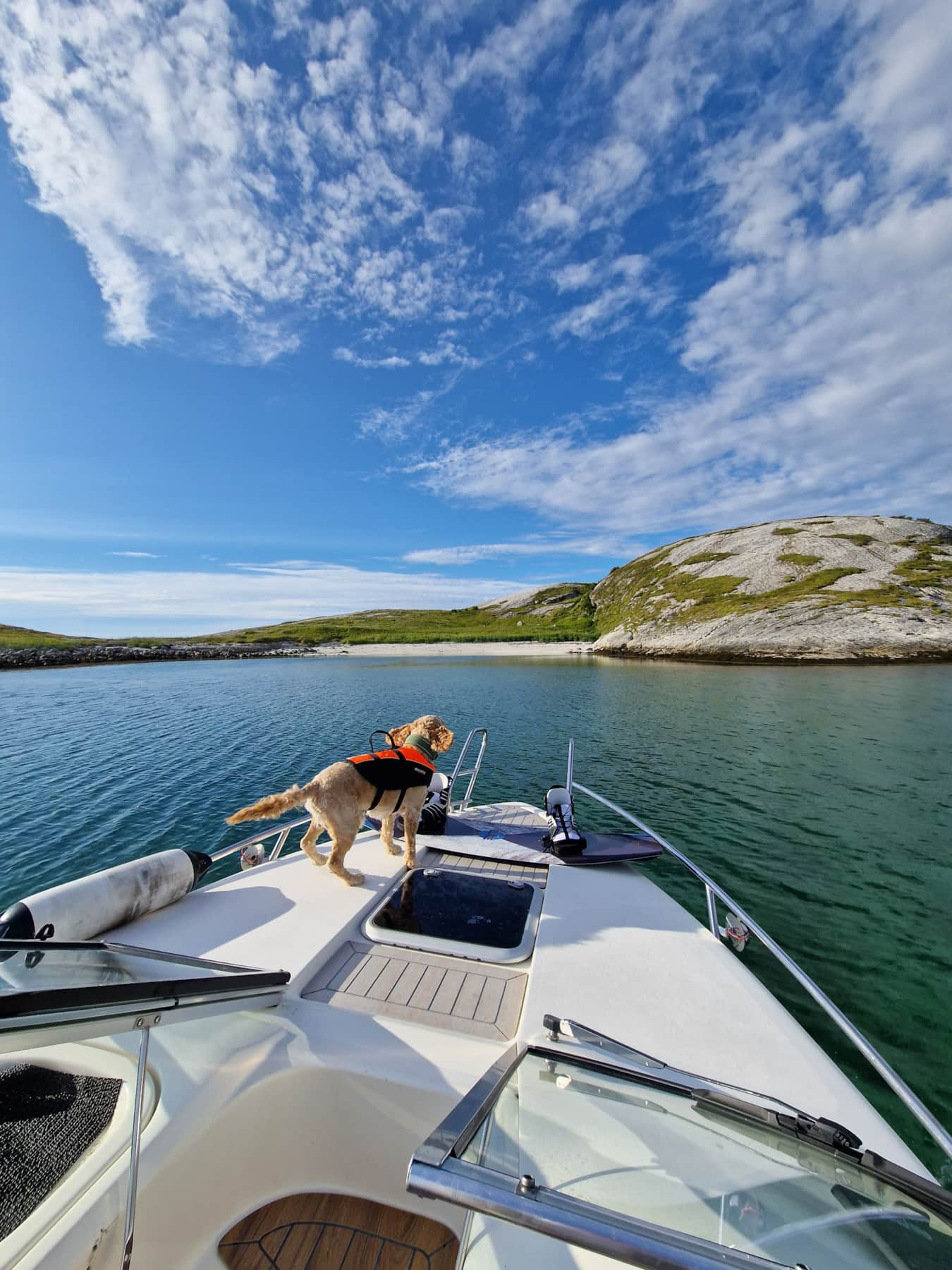
I den opprinnelige guiden deler Even sin interesse for skjærgården, øyhopping, Bella Daycruiser, Sea-Doo, vannsport og fotografering. Det er en annen måte å oppleve kysten på enn fra veien.
Ta kontakt dersom du ønsker en skreddersydd opplevelse på sjøen. Tilgjengelighet, fartøy, sikkerhetsopplegg og pris må avklares separat før du planlegger dette som en del av reisen.
På Sandhornøya ligger Langsanden, også kalt Sandvikstranden/Sandviksanden. Den lange hvite sandlinjen, fjellene og den åpne horisonten gjør dette til Evens personlige favoritt.
Sett av god tid til turen fra Bodø. Her er det plass til strandvandring, havutsikt og rolige sommerkvelder. Bruk tilrettelagt parkering, sjekk lokale regler for overnatting og gå ut på stranden til fots. Fasiliteter og sesongåpning må sjekkes før avreise.
Kjør nordover og ta den korte ferga mellom Festvåg og Misten. Kjerringøy Handelssted byr på bevarte trebygninger, handelshistorie, kaféstopp og et kystlandskap som har inspirert både kunstnere og filmskapere.
Dette er en fin dagstur med campervanen. Regn med fergetid og mulig venting, og la de små stoppene underveis bli en del av turen.
Midnattssol om sommeren og muligheter for nordlys i den mørke delen av året gir regionen helt ulike uttrykk gjennom sesongene. Oppsøk åpen horisont for sommersola og mørkere omgivelser utenfor byen for nordlys.
Været bestemmer hva du får se. Sjekk skydekke og forhold, og la utsiktspunktet passe både lyset og en trygg, lovlig parkeringsplass.
Breivika, Ausvika, Geitvågen og Mjelle gir ulike varianter av kysten uten at du trenger å reise til Lofoten først. Mjelle er særlig kjent for sanden med rødlige mineraler og utsikten mot åpent hav.
Avstand og tidsbruk varierer mellom stedene. Sett av tid til kjøring og gåturen fra parkeringen. Ta med et vindlag, vann og det du trenger, og ta søppelet med tilbake.
Keiservarden er den klassiske turen for utsikt over byen, fjordene og øyriket. Per Karlsatind og andre topper i Børvasstindan krever mer tid, erfaring og gode forhold.
Velg tur etter form, vær og årstid. En lang fjelldag bør legges tidligere i oppholdet, slik at du beholder god margin til tilbakelevering og fly.
Saltstraumen gir sterke naturopplevelser både fra land og gjennom en guidet båttur. Sjekk strømforhold og operatørens avganger. På sjøen kan du også få se havørn og kystlandskapet fra en ny vinkel.
Dette er en separat aktivitet med egne vilkår. Hold deg til sikre utsiktspunkter når du besøker strømmen på egen hånd.
En spaopplevelse på Wood Hotel kan være en rolig kontrast til fjellturene, med utsikt over kysten. Sjekk kapasitet, adgang og åpningstider direkte hos hotellet.
Tilbake i sentrum er havna og moloen fine steder for en gåtur, kafé og mat. City Nord er et eget stopp for handel og utstyr dersom du trenger å supplere før neste etappe.
KEEP EXPLORING
ENDestinations
Your complete Northern Norway playbook: Bodø, Lofoten, Helgeland, Steigen, Senja, Tromsø and the practical details in between.
ENDestinations
South Lofoten, beaches, hikes, fishing villages, Trollfjord and a 7+ day route from Bodø.
ENDestinations
Harbour saunas, Kjerringøy, Mjelle, Langsanden, mountain viewpoints and Saltstraumen.
YOUR NEXT GOOD STORY
Start in Bodø. Take the North at your own pace.
Find your vanPlan your trip · THE LOCAL FIELD NOTES
Freedom, local culture, seasonal comfort and a practical home that moves with the weather.
Lofoten’s dramatic peaks, deep fjords and fishing villages invite you to explore at your own pace. A campervan brings your accommodation with you, so you can linger at a viewpoint, change the day around the forecast and stay close to the next part of the route.
It is a useful alternative to fixed check-ins and daily drives back to one base. Choose authorised overnight places, then let a longer café stop or a beach walk become the plan.
A heated, insulated van gives you somewhere to return after a wet or windy day. Warm bedding, a place for cooking, a fridge and thoughtful lighting turn a small space into a comfortable base.
The original article highlights the e-Jumpy’s diesel heater, drying cabinet, dimmable lighting, propane stove and fridge/freezer. Our fleet now has different layouts, so choose the vehicle and equipment that fit your own trip.
Use established campsites and designated motorhome pitches whenever possible. The right to roam does not give a vehicle permission to drive or park anywhere. Follow road access, parking and overnight signs, keep at least 150 metres from inhabited houses and cabins when camping outside designated sites, and normally stay no more than two nights without the landowner’s permission. Never drive onto beaches or other uncultivated land. Empty greywater and toilet waste only at designated disposal stations.
Lofoten’s communities welcome considerate visitors. Buy locally, keep access clear and use the facilities that make responsible travel possible.
A warm mobile base is useful when you want to wait for a clear patch of sky. Cook dinner, keep layers ready and watch from a suitable place away from bright city lights.
Autumn and winter also bring shorter days, ice, wind and possible ferry disruption. A van does not remove those limits. Build a manageable route, confirm seasonal equipment and enjoy the quieter moments whether or not the aurora appears.
Bodø adds museums, cafés, harbour walks and Saltstraumen before the crossing. Collect your van at the agreed point, learn its systems and take a suitable ferry to Moskenes.
Starting here makes it possible to combine mainland days and the islands in one trip. Leave time on the return so that a ferry delay does not become a missed handover or flight.
Walk the fishing villages, visit galleries and artisan shops, and try the local seafood. Stockfish, fish burgers and regional lamb are as much a part of Lofoten as the viewpoints.
Your own kitchen makes market finds and simple picnic meals part of the journey. Park considerately and use tables or chairs only where permitted. The goal is a trip connected to the place and the people who live there.
For hikers, photographers and travellers who simply want a quieter horizon, the appeal is the same: enough structure to travel comfortably and enough freedom to make it your own.
KEEP EXPLORING
ENPlan your trip
The original 7-day Lofoten classic and a slower 10-day Bodø–Lofoten journey, with room for weather.
NOPlan your trip
Komfort, strøm, varme og praktiske valg for fotografer, par og arbeid på reisen.
NOPlan your trip
En norsk introduksjon til kulturbyen, spa, Saltstraumen, Kjerringøy, vinteraktiviteter og ferga videre.
YOUR NEXT GOOD STORY
Start in Bodø. Take the North at your own pace.
Find your vanPlan your trip · NORSK
Komfort, strøm, varme og praktiske valg for fotografer, par og arbeid på reisen.
Opplev kysten fra en liten base som følger deg videre. Gjennomtenkt innredning, varme, sengetøy og mulighet for matlaging gjør campervanen til et lite hjem mellom strender, fjell og fiskevær.
Den opprinnelige artikkelen beskriver konseptet som «Boutique Micro-Apartments på hjul». Poenget er plass som fungerer i hverdagen, fra kaffe om morgenen til et varmt sted etter dagens tur.
Flyplassen ligger nær byen og havna. Avtalt hentested og fremgangsmåte står i bestillingsbekreftelsen. Henting er fra kl. 16.00, og du får en personlig gjennomgang før du drar.
Planlegg ferga etter overleveringen og operatørens krav til oppmøte. En god start trenger litt tid til å bli kjent med bilen.
Sengetøy, dyner, puter og håndklær er del av grunnoppsettet. Bilen har oppvarming, men type varmer, drivstoffkilde og bruk varierer. Få demonstrert regulering og riktig avslutning ved henting.
Isolasjon, lys og vindusdekning bidrar til ro gjennom skiftende sesonger. Bekreft vinterutstyr og vannsystemets vinterbruk for bilen og datoene dine.
USB, bodelssystem og bærbar kraftstasjon gjør det mulig å lade kamera og annet utstyr. Hvilke 230V-uttak som virker uten landstrøm avhenger av bilen, batterinivået og apparatets effektbehov.
Ta med riktige ladere og avklar behovet for laptop, drone eller annet utstyr før bestilling. Strømreserven er en del av turplanen.
Med den elektriske e-Jumpyen kan en ladepause kombineres med handling, mat eller en kort gåtur. Se etter ladere langs ruten og bruk operatørens app for aktuell status, pris og betaling.
Rekkevidde og ladehastighet varierer med temperatur, vind, hastighet, terreng og batterinivå. Legg inn reserve og alternative ladere, spesielt i den kalde sesongen. Du får hjelp til å forstå bilen ved overlevering.
En varm base, lagring og mulighet for lading gjør det lettere å vente på det rette lyset. Avklar plass til stativer, kamerabagger og nødvendig strømforbruk.
De kompakte bilene passer for to som vil ha nærhet til naturen og en enkel, hyggelig base. Velg layout og seng etter egne behov.
En laptop kan bli med på turen, men strøm, datadekning og arbeidsplass må planlegges. Bekreft eventuell Wi-Fi-løsning og bruk en egen reserve for viktige møter.
Vi hjelper deg med å velge en bil og et opplegg som passer datoene. Bekreft oppvarming, isolasjon og vinterutstyr ved bestilling, og bruk anvisningene fra overleveringen.
Vinterdekk er bare en del av forutsetningene. Erfaring, vær, veiforhold og riktig fart må også være på plass. Velg en kortere etappe eller vent når forholdene krever det.
Vannsystemene er forskjellige. Få bekreftet hva som kan brukes i minusgrader og hvordan du beskytter eller tømmer systemet på akkurat din bil.
KEEP EXPLORING
ENPlan your trip
The original 7-day Lofoten classic and a slower 10-day Bodø–Lofoten journey, with room for weather.
ENPlan your trip
Freedom, local culture, seasonal comfort and a practical home that moves with the weather.
NOPlan your trip
En norsk introduksjon til kulturbyen, spa, Saltstraumen, Kjerringøy, vinteraktiviteter og ferga videre.
YOUR NEXT GOOD STORY
Start in Bodø. Take the North at your own pace.
Find your vanPlan your trip · NORSK
En norsk introduksjon til kulturbyen, spa, Saltstraumen, Kjerringøy, vinteraktiviteter og ferga videre.
Bodø kombinerer urbant kulturliv med rå arktisk natur. Byen var Europas kulturhovedstad i 2024, og her kan du starte reisen med havn, mat og utsikt før du setter kurs mot øyene.
Sommerens lange lyse døgn og vinterens mørke himmel gir ulike opplevelser. Velg årstid etter hva du vil gjøre, og la været være med på planleggingen.
Rønvikfjellet gir utsikt over byen og skjærgården. Undersøk spa, basseng og servering på Wood Hotel som en rolig start eller avslutning på reisen.
Bestill direkte hos tilbyderen og sjekk hvilke fasiliteter og tider som gjelder. Dette er en separat opplevelse fra campervanleien.
Besøk strømmen fra sikre utsiktspunkter, eller bestill en guidet RIB-tur. Sjekk strøm- og avgangstider før du drar; opplevelsen varierer gjennom døgnet.
Kombiner turen med middag ved havna eller starten på en etappe sørover.
Kjør nordover til Kjerringøy Handelssted for handelshistorie og et kystlandskap med hvite strender. Den korte ferga er del av turen.
Langsanden på Sandhornøya ligger i en annen retning, sør for Bodø. Gi derfor strandturen en egen etappe i stedet for å behandle den som et stopp rett etter Kjerringøy. Bruk tilrettelagt parkering og sjekk lokale regler for overnatting.
Om vinteren kan regionen by på ski- og snøaktiviteter når forholdene ligger til rette. Sjekk anlegg, åpning og snøforhold før du planlegger dagen.
Toppturer i vinterfjellet krever erfaring, utstyr og vurdering av skredfare; velg en kvalifisert guide hvis du trenger det. Mjelle kan være en fin kystkontrast, med vær og tilgang som avgjør besøket.
Nyt Bodø før du kjører om bord på ferga til Moskenes. De direkte avgangene tar vanligvis rundt 3–3½ timer, mens ruter via andre øyer tar lengre tid.
Sjekk den faktiske avgangen, reserver plass i travle perioder og følg kravene til oppmøte. Henting fra kl. 16.00 og levering innen kl. 12.00 må passe med fergeplanen.
KEEP EXPLORING
ENPlan your trip
The original 7-day Lofoten classic and a slower 10-day Bodø–Lofoten journey, with room for weather.
ENPlan your trip
Freedom, local culture, seasonal comfort and a practical home that moves with the weather.
NOPlan your trip
Komfort, strøm, varme og praktiske valg for fotografer, par og arbeid på reisen.
YOUR NEXT GOOD STORY
Start in Bodø. Take the North at your own pace.
Find your vanOn the road · THE LOCAL FIELD NOTES
The full equipment overview: cooking, bedding, power, winter tools, safety, water and cleaning.
Our vans are small homes for Arctic road trips, with the essentials for sleeping, cooking and living already onboard. The exact layout and equipment differ between Sunset Chaser, Arctic Voyager and Atlas.
Use this guide to prepare your questions, then check the selected vehicle’s current listing and booking terms. A feature shown for one van should not be assumed to be fitted to every van.
The compact e-Jumpy setup includes a portable double propane stove. Ask how and where to use the fitted cooking equipment safely and how to manage the fridge’s power.
Sunset Chaser uses a pull-out sofa bed; Arctic Voyager has its own custom layout; Atlas provides a family sleeping arrangement. Confirm the third guest arrangement in the e-Jumpy and the bed layout for your group before booking.
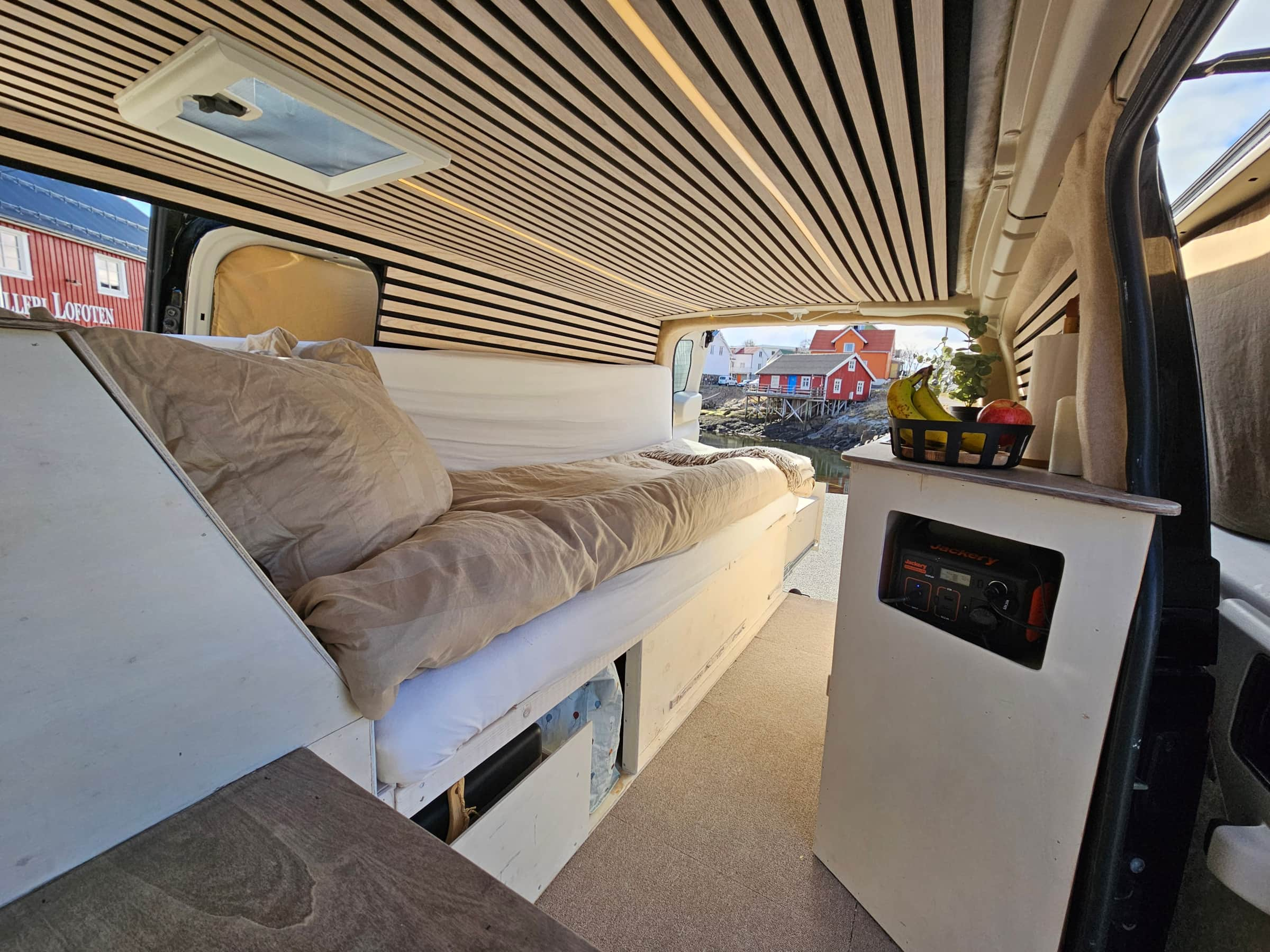
The original equipment guide highlights a Jackery or other portable power station, USB charging, 220/230V outlets, Apple CarPlay/Android Auto and a projector with screen. Availability and power arrangements vary between vehicles.
Ask which outlets work away from campsite hookup, the available battery capacity and how to recharge the power station. Confirm any must-have Wi-Fi/data provision, spare cables or projector setup before relying on them for work or entertainment.
Fresh-water storage, a sink, fridge and practical luggage space make daily life easier. The e-Jumpy’s original specification describes an outdoor shower, water tanks, drying storage, roof hatch, sliding window and pull-up dining table.
Atlas has its own shower and toilet. Water capacities, hot-water facilities, fridge type and winter use are specific to the vehicle. Follow the handover and guest manual for filling, emptying and frost protection.
Confirm seasonal suitability with us when booking. Winter travel also needs suitable experience, shorter driving days and flexibility around forecasts.
The original equipment page includes final cleaning, a handheld vacuum, cleaning supplies and biodegradable products. Check the exact cleaning inclusion and return duties in your booking agreement.
Keep the interior tidy, wash used kitchenware, remove rubbish and follow the instructions for linen, water and toilet systems. Included final cleaning does not replace the agreed guest return checklist.
Insurance is included according to the cover, excess, exclusions and driver requirements shown in the rental agreement. Review those conditions before booking.
Collect in Bodø at the agreed point from 16:00 and return by 12:00. Ferry tickets, campsites, charging, tolls and optional activities follow their own charges or the terms of your rental. Confirm the details that matter to you before making the reservation.
KEEP EXPLORING
ENOn the road
Packing, narrow roads, changing weather, facilities, responsible camping and living well in the van.
ENOn the road
Airport collection, EV range and charging, winter comfort, kitchen, showers, tolls, parking and support.
ENDestinations
Your complete Northern Norway playbook: Bodø, Lofoten, Helgeland, Steigen, Senja, Tromsø and the practical details in between.
YOUR NEXT GOOD STORY
Start in Bodø. Take the North at your own pace.
Find your vanOn the road · THE LOCAL FIELD NOTES
Airport collection, EV range and charging, winter comfort, kitchen, showers, tolls, parking and support.
Our base is Bodø, close to the airport. Your booking confirmation gives the agreed collection point and handover details. Pick-up is from 16:00 and return is by 12:00. Allow time to learn the controls before continuing to a ferry.
Winter tyres help, but they do not remove the risks of ice, wind or poor visibility. Confirm the equipment fitted for your dates, keep a shorter route and drive within your experience. Check weather and road information before each leg and be prepared to wait.
The vans have heating and bedding for cooler evenings. Heater type, output, fuel source and winter-water arrangements differ by vehicle. Tell us your dates and plans so we can confirm the appropriate setup, and learn the operating and shutdown procedure during handover.
Sunset Chaser is the 75 kWh Citroën e-Jumpy. The original FAQ quotes approximately 250–300 km in summer as a planning example. Actual range can be considerably lower in cold, windy or fast-driving conditions; do not plan to use the full nominal range. We will help you plan charging and a useful reserve.
The e-Jumpy supports CCS DC fast charging up to 100 kW. The original guide describes roughly 45 minutes from 10% to 80% under suitable conditions. Battery temperature, starting charge and charger power affect the actual time.
Charging prices vary by operator, app and site. Check the live rate before starting and avoid assuming a fixed saving compared with diesel. A grocery stop or coffee break can be a good time to charge.
Plan around the chargers on your actual route and check live availability in the operator’s app. Have a second option and a reserve, especially in winter. Ask us at handover for route-specific suggestions rather than relying on an old charger list.
Tell us what you want to carry before booking. Roof rails, mounts, storage space, vehicle height and load limits depend on the van. Accessories must be agreed separately, with safe fitting and use confirmed.
Power stations, leisure systems and sockets provide charging options, but the supply and capacity vary by vehicle. Confirm your equipment’s wattage and which outlets work off-grid. Carry the correct chargers and plan time to replenish the power supply.
Kitchenware, pots, pans, cups and cutlery are supplied, along with cooking and cold-storage facilities for the selected van. Coffee, tea and basic spices are part of the original setup. Confirm the current equipment and safe use of the specific stove and fridge at handover.
The compact electric van has an outdoor shower arrangement, while Atlas has an interior shower and toilet. Facilities in Arctic Voyager should be checked in its current listing. Water capacity, hot water and winter use vary. Campsites can provide additional shower facilities.
Use established campsites and designated motorhome pitches whenever possible. The right to roam does not give a vehicle permission to drive or park anywhere. Follow road access, parking and overnight signs, keep at least 150 metres from inhabited houses and cabins when camping outside designated sites, and normally stay no more than two nights without the landowner’s permission. Never drive onto beaches or other uncultivated land. Empty greywater and toilet waste only at designated disposal stations.
Our vans use AutoPASS arrangements for applicable road tolls and ferry charges. Settlement follows your rental agreement. Some journeys require a separate booking or reservation payment, so do not assume the tag reserves ferry space. Vehicle size and current tariff rules affect charges.
You receive the support contact and instructions with your booking and at handover. For a vehicle question, charging issue or change in plans, contact us using those details. For immediate danger, use the appropriate emergency service rather than waiting for a rental-company reply.
A small local fleet means a personal introduction, vehicle-specific advice and routes drawn from life in the North. We want the van to feel like your own little base, with room for the unexpected parts of the journey.
KEEP EXPLORING
ENOn the road
Packing, narrow roads, changing weather, facilities, responsible camping and living well in the van.
ENOn the road
The full equipment overview: cooking, bedding, power, winter tools, safety, water and cleaning.
ENDestinations
Your complete Northern Norway playbook: Bodø, Lofoten, Helgeland, Steigen, Senja, Tromsø and the practical details in between.
YOUR NEXT GOOD STORY
Start in Bodø. Take the North at your own pace.
Find your van