Reine
Reine is the visual anchor of the islands. It is compact, dramatic and ideal as an early base because the scenery is world-class from the moment you step out of the van.
Guides & Travel Info
Lofoten is one of those rare places that actually lives up to the hype. Sharp peaks, white beaches, fishing villages and roads that make you stop more often than you planned. This guide is built for the traveller who wants to explore it properly — with freedom, comfort and a smarter route from Bodø.
Why it works so well
Lofoten is compact enough to feel manageable, but dramatic enough to feel endless. That is exactly why a campervan works so well here.
You can follow a smart overall route without locking yourself into rigid schedules, rushed check-ins or wasted detours.
Some days Lofoten is made for hikes, some days for beaches, and some days for a harbor café and a slower pace. A van lets you adapt instead of forcing the plan.
This is not a destination where the “main attraction” is one stop. The drive itself is part of the experience from the first ferry to the final return.
Suggested rhythm
Keep it simple: arrive through Bodø, ferry to Moskenes, work east through the islands, and give yourself enough time to stop when the landscape deserves it.
Ferry from Bodø to Moskenes, then settle around Reine for a calm first evening in South Lofoten.
Focus on the classic postcard zone: Reine, Hamnøy, Sakrisøy, Å and one proper hike if the weather plays along.
Move toward Leknes, Haukland, Uttakleiv and the beach-heavy central section of the islands.
Slow things down in Henningsvær and Svolvær where the trip feels a bit more lived-in and less like a constant photoshoot.
Finish strong, not rushed. Let the final stretch feel intentional instead of just turning around and repeating the same road.
Start early, drive calmly, hike late, and leave enough space for the stops you did not know would become your favourites.
The opening act
This is where most people fall for Lofoten properly. The scenery is compressed, intense and cinematic in a way that feels almost unfair.
Reine is the visual anchor of the islands. It is compact, dramatic and ideal as an early base because the scenery is world-class from the moment you step out of the van.
One of the shortest stops with one of the biggest visual payoffs. It is a pure viewpoint moment, but a very memorable one.
Slightly softer and more intimate than Reine, but full of color, harbor atmosphere and those quiet little details that make the route feel richer.
The end of the road gives the route a real sense of arrival. It adds culture, fishing history and a slower tone before you start moving east again.
Sea level magic
Lofoten’s beaches are not side notes. They are a huge part of what makes the islands feel so different from other mountain destinations.
Clean, open and instantly rewarding. Haukland is the easiest “wow” beach in Lofoten and a perfect place to give the trip a slower half-day.
Rougher, moodier and more dramatic. It is one of the best places for late light, big skies and the kind of atmosphere that makes you stay longer than planned.
Softer and more open in mood, Ramberg works beautifully as a scenic pause between bigger viewpoints and longer drives.
If you want surf energy, stronger weather and a slightly wilder feel, Unstad gives the route a sharper edge.
Big rewards
The best hikes in Lofoten do more than give you a summit. They connect the whole landscape and make the islands suddenly make sense from above.
Short, steep and iconic. Famous for a reason, but best saved for a clear day and a calm pace.
A proper combination of beach and mountain. One of the most satisfying full-experience days in the islands.
Strong alternatives if you want big views without following the exact same plan as everyone else.
The richer second half
Western Lofoten gives you the postcard. Eastern Lofoten gives you atmosphere, food, small luxuries and a more grounded travel rhythm.
One of the strongest “slow travel” stops in the islands. Great harbor energy, galleries, cafés and enough style to feel like a proper break in the route.
The practical hub of the trip. It is where supplies, tours, restaurants and route decisions become easier.
If you want one standout activity, this is one of the most memorable choices. It adds another layer to the road trip without feeling forced.
The eastern side helps the trip breathe. It makes the overall journey feel more complete and less like a nonstop scenic sprint.
Small moves, big difference
A great Lofoten trip is often more about timing and pacing than about seeing more places.
Quieter roads, easier parking and a much calmer feel to the day.
The light gets better, the mood gets softer and many of the best moments happen after the busiest hours are over.
The trip becomes much more premium when every stop gets enough time instead of turning into a checklist.
A stronger finish
The best version of Lofoten is not the one where you simply retrace every kilometer back in a hurry. End the route with the same calm confidence you started it with.
The goal is not to “complete” Lofoten. It is to move through it in a way that feels intentional, comfortable and memorable from start to finish.
Ready to go
With the right route, the right pace and the right campervan, Lofoten becomes easier, calmer and far more rewarding.
That is exactly the experience we want to make possible — premium freedom, strong scenery and a road trip that feels easy in all the right ways.
Guides & Travel Info
Beaches, peaks, fishing villages and Arctic road trips that actually live up to the fantasy. This guide is built to help guests move smart, prioritize the right stops and turn a beautiful route into a genuinely great trip.
Lofoten Travel Info
Lofoten is where Norway turns the drama slider to 11. This page is built to help guests prioritize the right stops, move intelligently and avoid turning a dream road trip into a queue of rushed photo stops and bad timing decisions.
The cleanest strategy is simple: arrive through Bodø, ferry to Moskenes, work east through the islands and leave enough room for weather and light to shape the day.
Lofoten rewards quality over speed. The strongest trip is rarely the busiest one — it is the one that gives the best stops enough time.
Drive early, hike late, pivot when the weather shifts and stay near the scenery instead of commuting back and forth from fixed accommodation.
Your Journey
The winning strategy is simple: move efficiently, hike when the light is softer and keep the plan flexible enough to respond to weather. In summer, drive early and hike late. In shoulder season, chase light and clarity.
Oslo to Bodø is the clean, efficient start. You skip long dead-distance driving and begin the real trip where it actually gets interesting.
Once you land, the transition from airport to road trip should feel smooth, not messy. That is part of the premium experience.
The ferry from Bodø to Moskenes is not just transport. It is the reset point between mainland logistics and island mode.
Zone 01
South Lofoten is the postcard zone. Reine, Hamnøy, Sakrisøy and Å are close enough to cover efficiently, which makes this the highest-return area for first-time visitors.
Compact, walkable and visually absurd in the best possible way. Reine works brilliantly as a base because the scenery is already elite before you even start moving.
One of the strongest short-stop viewpoints in the whole region. Best treated as a quick, high-impact photo and scenery stop rather than a long stay.
Colorful, compact and unusually photogenic. It works best as part of a slow loop with Reine and Hamnøy where you actually take time to walk, not just park and flee.
More than just the end of the E10. Å gives the route a proper sense of arrival, plus cultural depth and a strong village atmosphere that balances out the visual overload.
The signature icon hike of South Lofoten. Best done early or late, and absolutely not worth forcing if the summit is buried in fog soup.
Base in Reine, use Hamnøy and Sakrisøy for viewpoints, add Å for culture and include one major hike if conditions are good. Clean, efficient, unforgettable.
Zone 02
This is where Lofoten stops looking like normal Norway and starts looking faintly illegal. White sand, turquoise water, sharp peaks and some of the most rewarding moderate hikes in the region.
The benchmark beach: easy access, huge visual payoff and one of the best calm-weather stops for a slower half-day in the van.
Rougher coastline, darker rocks and stronger midnight sun atmosphere. Great for moody photography and evenings that stretch longer than planned.
Arctic surf icon, strong identity, worth the detour even if you never touch a board. More edge, more weather, more character.
A hike-to-beach experience with massive reward. Budget more time than you think you need and pack like you mean it.
One of the best cliff-style viewpoints in Lofoten. Clear weather matters, and so do proper shoes — the mountain is not impressed by optimism.
Midday for beaches, late evening for hikes, and windy days for villages or more sheltered coastal stops. That one change alone improves the whole trip.
Zone 03
These are the stops that give the route personality. Less “look at that mountain” and more atmosphere, food, history and slower travel rhythm.
One of the most photogenic preserved fishing villages in Lofoten and an excellent slow-travel stop when you want atmosphere over adrenaline.
Lofoten’s cool-village play: cafés, galleries, harbor life and a walkable rhythm that makes it easy to enjoy without trying too hard.
A strong weather-proof cultural stop and one of the easiest “good decision” detours in the region when you want variety without ruining the route.
Let villages act as breathing-room between hikes and beaches. They work especially well for slower mornings, ugly-weather afternoons and better food stops.
Zone 04
Svolvær is the operational hub. This is where the trip gets easier again: restock, eat properly, book a boat tour and build a cleaner transition into the return leg.
The best logistics base in Lofoten. Food, supplies, structure and enough flexibility to support both summer and shoulder-season travel well.
One of the strongest paid experiences in the region. Narrow fjord, steep walls, sea eagle potential and serious scenery without needing hiking legs.
Reset in town, do a boat day if conditions support it, then move toward the return route with a much cleaner head and a much fuller camera roll.
Arctic light
The same coastal openness that makes Lofoten so cinematic in summer also makes it a serious light-chasing region when the darker months bring clear skies.
One of the best-known midnight sun locations in Lofoten. Easy access, wide ocean horizon and very high reward for very little effort.
Midnight sun wants open horizons and western coastline. Aurora wants darkness, patience and the discipline not to panic after 20 cloudy minutes.
Reine, Hamnøy, Sakrisøy and Å remain the core visual stops for first-time visitors.
Reinebringen still wins on pure icon status, but only when the weather deserves it.
Haukland and Uttakleiv are the strongest one-two punch for easy-access coastal beauty.
Nusfjord and the Viking Museum help keep the trip rich, not repetitive.
Svolvær plus Trollfjord gives the route another dimension when you want more than roads and viewpoints.
Eggum is still one of the cleanest, easiest and most satisfying evening wins in the islands.
One clean route
This is the cleaner version of the route logic: no overlap, no repeated blocks, just a trip plan that actually reads like something a real person would want to follow.
Bodø → Moskenes ferry. Settle near the Reine area and keep the first evening easy.
Reine, Hamnøy and Sakrisøy loop. Golden hour is your best friend here.
Reinebringen if the weather behaves, then begin moving toward Ramberg / Flakstad.
Haukland and Uttakleiv. Optional Unstad if you want a little more edge.
Henningsvær, then an evening base in Svolvær for easier logistics and a softer pace.
Trollfjord or another adventure day, then work your way toward the return route.
Bognes ↔ Lødingen ferry, then continue via Hamarøy and Steigen / Engeløya back toward Bodø if you want a smarter, less repetitive finale.
Bodø → Moskenes ferry → west-to-east Lofoten → ferry return → mainland corridor. Cleaner, richer and far less repetitive than simply reversing the whole trip.
The boring stuff that matters
Not glamorous, but this is the cheat sheet that keeps the beautiful part of the trip running smoothly.
Plan around roughly 3.5 hours, treat summer reservations as essential and remember that vehicle length affects pricing. Also: yes, eat the svele.
Stock up properly in Bodø, especially if you want to keep the route smooth. Norwegian alcohol rules are strict, so freestyle is not a strategy.
Diesel heater means do not run too low on fuel, 12V USB is simple, 230V depends on campsite hookup and tolls are typically handled after the trip.
Do fewer stops, but do them better. Chase light instead of anxiety, and let the weather shape the day rather than forcing dumb plans into beautiful landscapes.
Ready to roll?
Lofoten is not difficult to sell. The real job is making the page feel premium, useful and easy to act on — and making the road trip itself feel just as clean.
Lofoten is where Norway turns the drama slider to 11. This is the practical version — what to prioritize, how to move smart, where to hike, and where the midnight sun hits different. Built for campervan travel: flexible, efficient, and ridiculously beautiful.
Oslo → Bodø. Quick hop over the mountains.
Walk to your van. No shuttles, no chaos.
Drive to port. Ferry = reset time.
Lofoten roads + peaks. Arctic mode: ON.
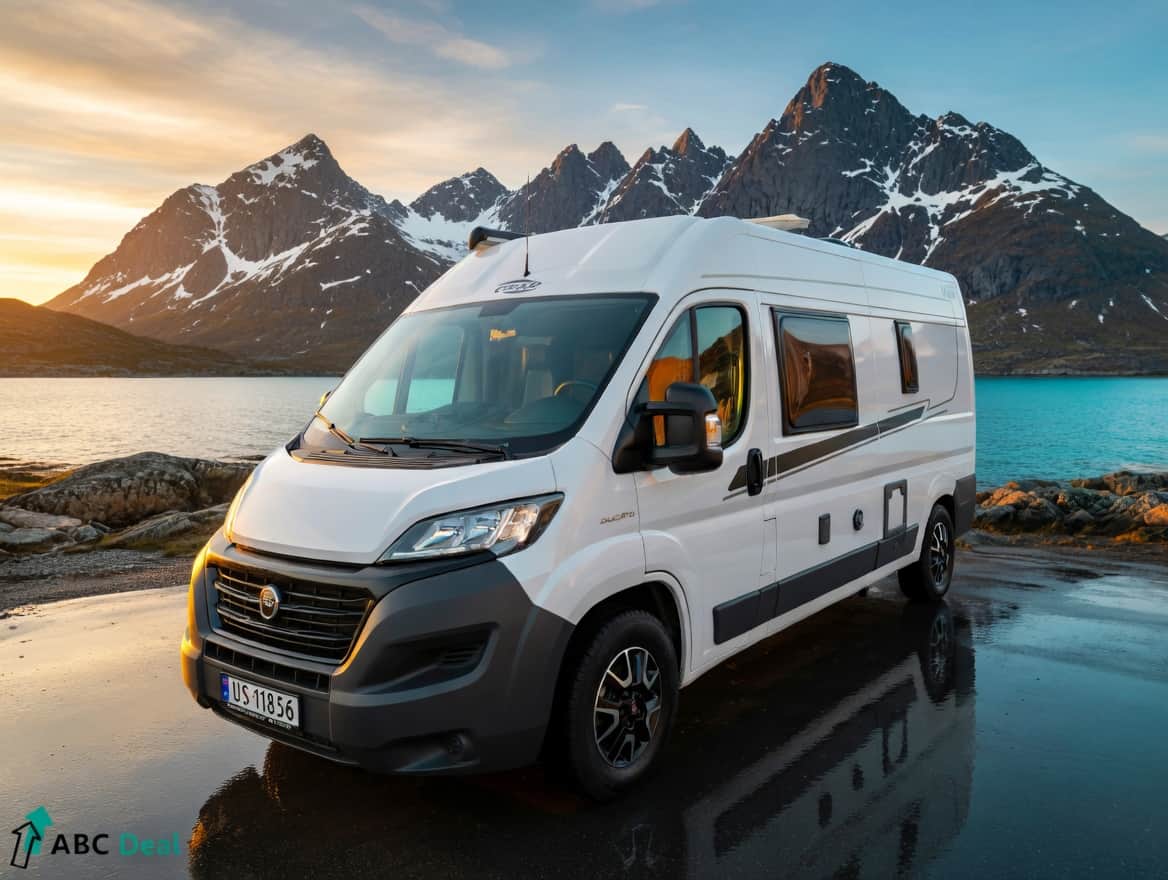
The “yes, that’s real” village. Compact, walkable, and glassy fjords. Best light: early morning or late evening when crowds drop.
The bridge viewpoint is iconic. Shines in golden light and stormy weather. High-impact viewpoint, keep traffic flowing.
Tiny, yellow rorbuer and tight harbor views. Rewards slow walking and side angles. Moody weather adds character here.
The punctuation mark at the end of the E10. Cultural stop with strong fishing heritage and a fairytale tempo.
Earn-your-view stairs. Steep but worth it on clear days. Go early or late. Skip if foggy!
White sand, turquoise water. Arrive early in peak season. One of the best places in Lofoten to just exist.
Raw coastline and dark rocks. A favorite for midnight sun sessions and stormy photography.
Wild water and big energy. Steep mountains guarding the bay. Great for aurora potential in winter.
Step into the edge of the world. No facilities: pack what you need and leave absolutely no trace.
The cliff above Kvalvika. Exposed and windy—treat it with respect. Good footwear is mandatory.
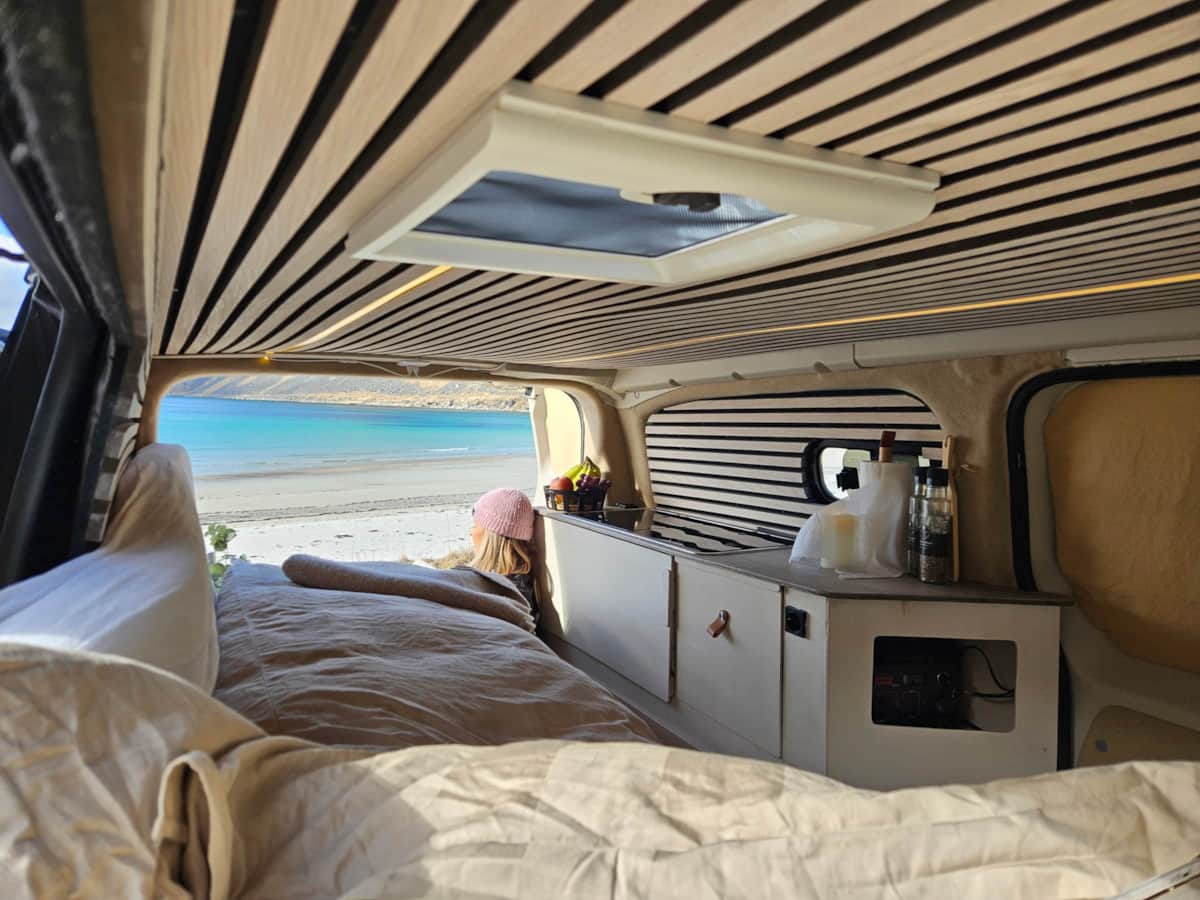
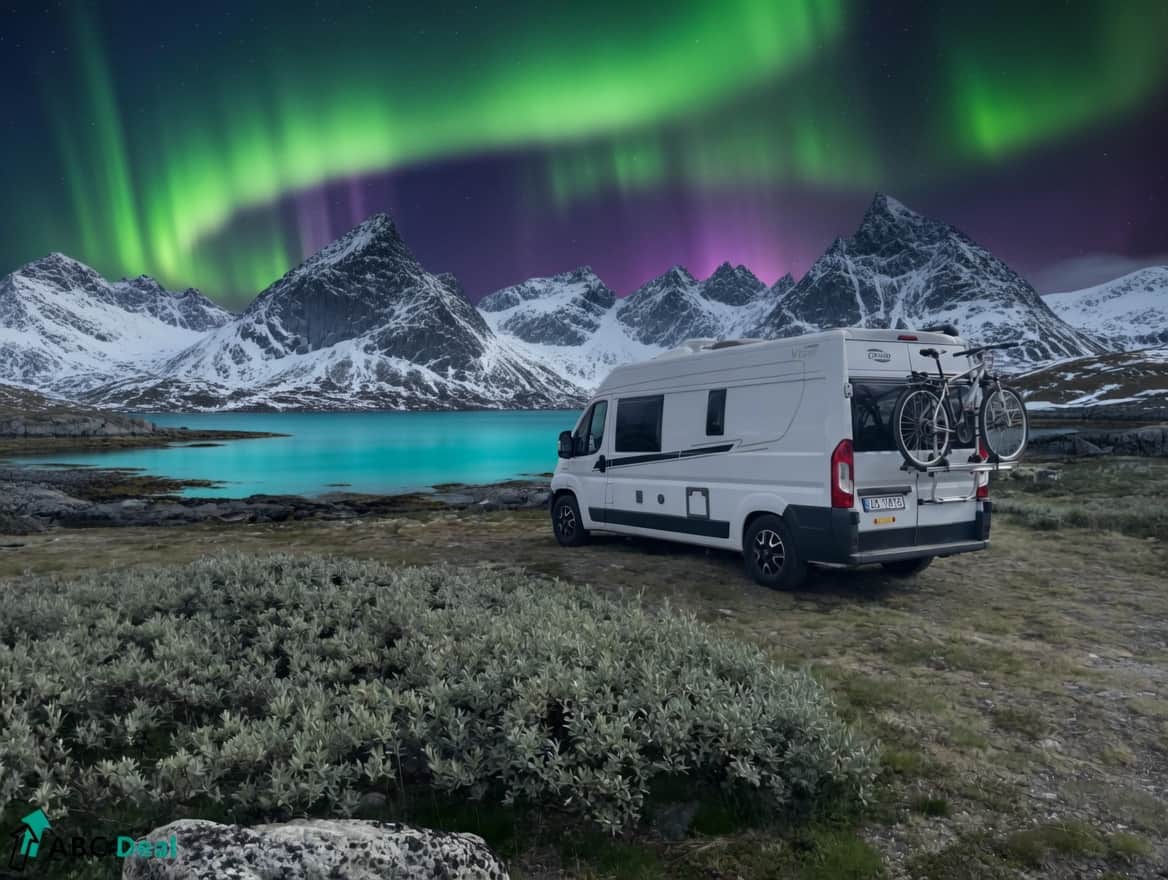
One of the most photogenic and preserved villages. Parking is tight, so arrive early for a smoother visit.
The “cool kid” village. Cafés, galleries, and big mountains. Perfect for a rest day to eat and stroll.
History made real. Reconstructed longhouse right by the E10. Your "rainy day" savior.
The hub. Best place to restock, book tours, and plan your next moves between beaches.
Narrow, steep-sided, and made for boat tours. Sea-eagle spotting and dramatic scenery. Dress warm!
Hit the highlights without the traffic queues. That’s the point. 🚐
Start Your AdventureThe boring stuff that makes the fun stuff possible. Here is your logistical cheat sheet.
This is your bridge to the islands.
• Time: Approx 3.5 hours.
• Booking: In summer (Jun-Aug), booking is essential. We send you the direct link.
• Cost: As a campervan, you pay for the vehicle length (usually under 6m to save money).
• Pro Tip: Eat the "Svele" (Norwegian pancake) on board. It's a tradition.
Stock up before you leave Bodø!
• Supermarkets: Rema 1000 and Coop Extra are your best value options.
• Alcohol: Can only be bought at "Vinmonopolet" (wine/spirits) or supermarkets (beer) before specific times (usually 8pm wkd / 6pm Sat).
• Water: Tap water in Norway is cleaner than bottled water. Fill up for free at gas stations.
• Heating: Our Webasto heaters run on diesel. Keep your fuel tank above 1/4 full.
• Power: 12V USB ports are always on. 230V outlets (for laptops) work when plugged into campsite power.
• Tolls: We have an AutoPass chip. We tally your tolls after the trip—just drive and enjoy.

The practical version of Lofoten — what to prioritize, how to move smart, where to hike, where to chill, and how to avoid turning paradise into traffic-queue tourism.
Reine, Hamnøy, Sakrisøy and Å are the highest-ROI part of the islands. Easy to cover efficiently, huge payoff.
Drive earlier, hike later, and let weather and light decide the order instead of forcing a rigid plan.
You can pivot between beaches, peaks, villages and dark-sky spots without having to rebook your whole life.
Same page content, cleaner structure, stronger scanability.
The live page already has a smart 7+ day flow and a practical FAQ. This just makes both easier to use.
Guides & Travel Info
Lofoten is not just a destination. It is a moving postcard of jagged peaks, white beaches, fishing villages and roads that make you pull over every ten minutes. This guide is made for travellers arriving through Bodø and exploring the islands the smart way: slower, better, and with just enough structure to avoid turning freedom into chaos.
Why it works
Lofoten gives you rare scenery density. The distances are manageable, the light changes constantly, and a campervan lets you move with the weather instead of fighting it.
You do not need to reinvent the wheel. Arrive through Bodø, ferry to Moskenes, work east through the islands, then return through the mainland corridor.
You can stay longer where the light is good, pivot when the weather changes, and avoid locking yourself into rigid check-ins and expensive detours.
The best Lofoten trip is not about cramming in everything. It is about combining dramatic scenery, good food, strong stops and enough breathing room to actually enjoy it.
Smart route flow
This is the cleanest way to do it from Bodø without wasting half the trip on backtracking and bad timing.
Bodø → Moskenes ferry, then settle near Reine or nearby for a calm first evening.
Reine, Hamnøy and Sakrisøy. Keep it scenic, slow and photo-heavy.
Reinebringen if conditions are good, then drift toward Ramberg / Flakstad area.
Haukland + Uttakleiv, with optional Unstad if you want more edge and surf culture.
Henningsvær for galleries, cafés and harbor mood, then reset in or around Svolvær.
Svolvær and eastern Lofoten, then smart return through the mainland corridor rather than repeating the same route back.
Start strong
If you want the iconic first impression, this is where it happens. Red cabins, steep mountains, tight fjords and some of the most famous viewpoints in all of Norway.
Reine is the visual anchor of the whole trip. It feels cinematic from the first minute, works perfectly as an early base, and gives you huge reward without needing major logistics.
Hamnøy is all about viewpoint impact. It is a short stop, but one of the strongest “yes, this is actually real” moments in Lofoten.
Smaller, softer and more intimate than Reine, but visually rich. It adds warmth and harbor texture to the route.
The end of the road, but not the end of the experience. Å adds history, calm and proper fishing-village atmosphere to the opening part of the trip.
Open horizons
Lofoten is not just peaks and roads. Some of the most memorable stops happen at sea level, where the contrast between white sand and dark mountains makes the whole place feel unreal.
Haukland is the most instantly rewarding beach in Lofoten. Easy to access, dramatic, and ideal for a slower half-day when you want beauty without a complicated mission.
Rougher, moodier and more atmospheric than Haukland. One of the best spots for midnight sun, stormy seas and strong photography.
Ramberg gives you a broader, softer beach feeling and works well as a breathing-space stop between bigger viewpoints and hikes.
For surf energy, stronger weather and a more adventurous feel, Unstad adds character that few other places in the islands can match.
Big payoff
The best Lofoten hikes are not just famous — they change your perspective of the islands. Suddenly the villages, beaches and roads become one connected landscape instead of separate stops.
Short, steep, iconic. A clear-weather classic and one of the best summit rewards in Northern Norway.
A proper adventure combo: beach, mountain, scale and the kind of reward that makes people suddenly quiet.
Great alternatives when you want powerful views without forcing the same famous hike everyone else is chasing.
The eastern shift
Western Lofoten gives you the postcard. Eastern Lofoten gives you rhythm, food, culture and breathing room. This is where the trip starts feeling richer, not just prettier.
Harbour mood, galleries, cafés and a more refined village feel. It is one of the strongest “slow travel” stops in the whole route.
The practical hub. Supplies, tours, food, structure and a great place to reset before deciding whether to push on or slow down.
If you want one signature activity, this is the one. Strong scenery, sea eagle potential and a good way to add variety to the road trip.
The eastern side feels slightly less performed and slightly more lived in. That makes it a great counterweight to the heavily photographed western icons.
Light, timing & comfort
The difference between a good Lofoten trip and a great one is usually timing, not distance.
Roads are calmer, parking is easier, and the trip feels more premium when you are not fighting the middle of the day.
Better light, fewer people and much more atmosphere. Lofoten after dinner is often stronger than Lofoten at noon.
This is the real campervan advantage. If the weather shifts, the route shifts. That is not a problem — that is the whole point.
The smart ending
The cleanest version of this journey ends by returning through the mainland corridor north of Bodø rather than simply backtracking through the exact same island road.
You keep the trip feeling progressive instead of looping through the same visual story twice.
Mainland coastal landscapes give you a different type of beauty — broader, calmer and more spacious.
It makes the journey feel complete. Not just finished, but rounded off properly.
Ready to go
The best Lofoten trip is not the busiest one. It is the one that gives you enough structure to move well, enough freedom to adapt, and enough comfort to enjoy every part of it.
This is exactly why our campervans are built around flexibility, comfort and the kind of premium simplicity that makes Arctic road trips feel easy.
Welcome to the Arctic adventure. This guide is built for guests who want the freedom of a campervan route through Northern Norway — from white-sand beaches and dramatic hikes to Northern Lights skies, scenic ferry crossings and quieter local gems.
This page keeps the original guidebook depth, but breaks it into clearer destination boxes so guests can scan faster and plan smarter.
Use Bodø as the launchpad, then shape the trip around ferries, weather windows, beaches, hikes and the kind of pacing your guests actually want.
This region rewards flexibility. The best stops are often the ones you stay longer at because the light, weather and mood are right.
Bodø works as both a destination and a launchpad: scenic drives, beaches, practical camping, strong food options and some very easy high-payoff day trips.
This is the flagship route: iconic villages, big hikes, white beaches and the strongest concentration of “postcard Norway” in the region.
The coastal pearl route: less crowded than Lofoten, but packed with dramatic scenery, glacier access, island views and some seriously strong food stops.
Senja gives you fairytale-island drama. Tromsø gives you Arctic city energy, cable-car views and food. Together they round out the longer northern route.
The original page already has the right ingredients. Here they are in a cleaner format guests can actually act on.
Ferries, wild-camping rules and winter driving — still all here, just no longer buried inside a scroll marathon.
Enjoy the freedom, the beauty and the strange, addictive calm of the north. Whether you are parked beside a turquoise bay, under a sky full of stars, or eating a fish burger in Lofoten after a long day on the road — go make some core memories.